Catégorie : Non classé

  • DRONE 2000

    DRONE 2000

    Nicolas Maigret
     
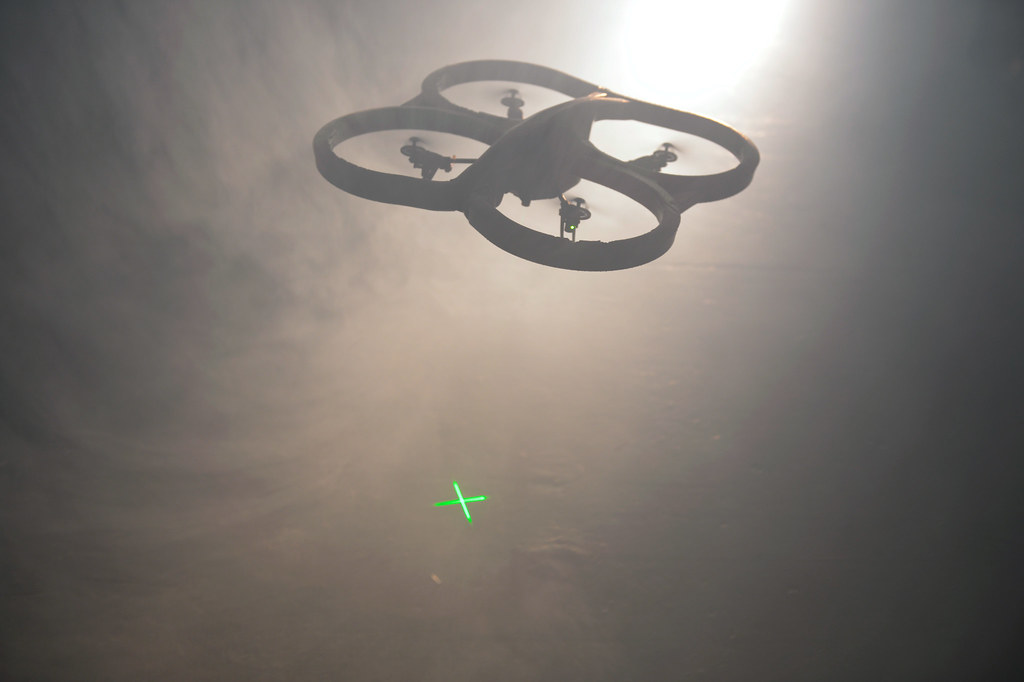
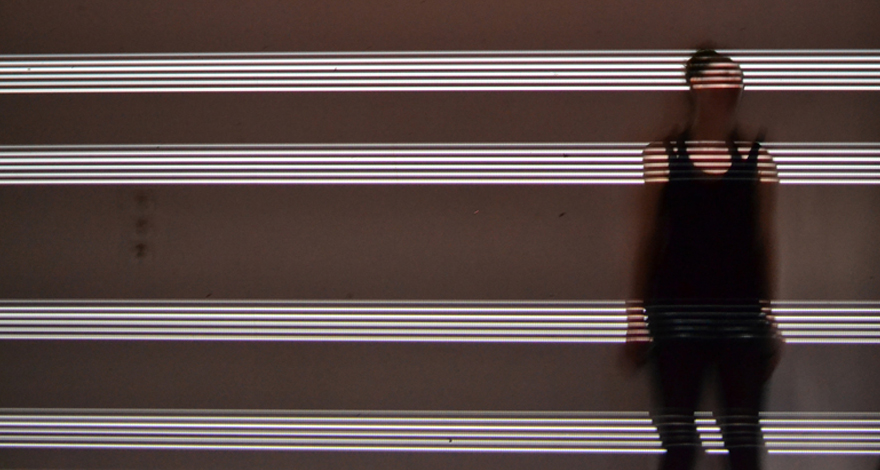
    DRONE.2000 is a critical performance echoing the western taste for the drone technology, seemingly ludicrous and born of modelling and military research. The use of Unmanned Aerial Vehicles (UAV) has spread for ten years through hacking, cinema, video games and art spheres. It is highly promoted by the same societies producing them, militaro-industrial congglomerates, entertainment industry investments, as well as 20th century science-fiction fantasy.
    DRONE.2000 is a performance where autonomous objects moved by simple algorithms are patrolling over the audience. Their latent and dysfunctional presence is a concrete threat. Drone.2000 takes us into a dystopian situation, thus illustrating the military origins of these entertaining objects. Here, trusting the autonomy of the machine is not only a discursive concept but a true experience shared with the audience, triggering off their reactions, tensions and commitment of their bodies in situation of symbolic and real danger.

    http://peripheriques.free.fr/drone.2000/
     

    2014 - Drone - 2000 Résidence Nicolas Maigret


  • ICOS

    ICOS

    François Lejault
     
    Le Lab GAMERZ accueille en open résidence François Lejaut pour le développement de son dernier projet ICOS. Icos est un projet d’icosystème dans le quel se forment et se transforment des films-paysages au gré des données météorologiques récupérées en temps réel sur internet. Ce système se construit autour d’une banque de plans vidéos et audios, classés suivant des critères de luminance, de mouvement et de chrominance, et catégorisés en familles. Le système distribue ces plans sur des écrans en fonction de lois de composition internes pondérées par des données météorologiques (vitesse du vent, luminosité).
     
    http://lejault.free.fr
     

    2014 - Résidence Icos François Lejault


  • Residence Bastien Vacherand

    Residence Bastien Vacherand

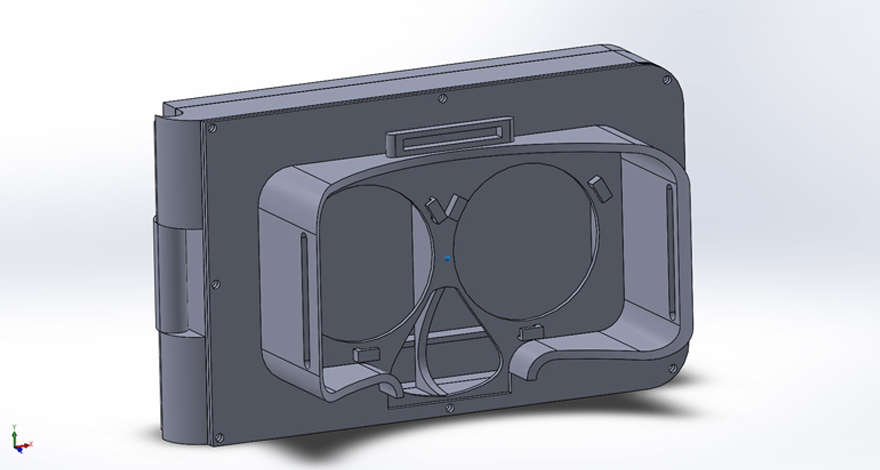
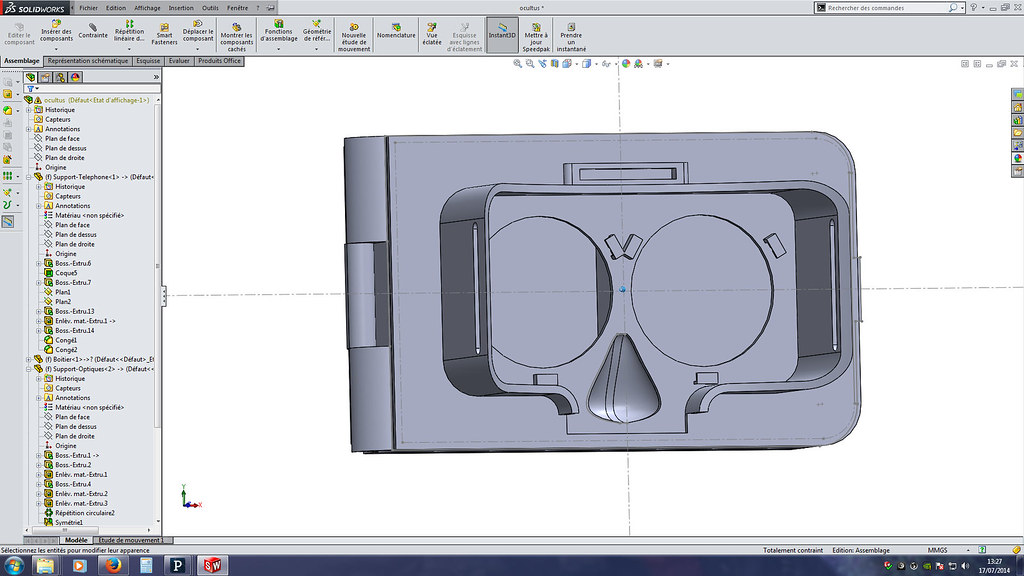
    Bastien Vacherand, artiste actuellement en Open Résidence au Lab GAMERZ contribue à la tendance des casques d’immersion. D’un côté il y a ceux qui investissent des milliards de dollars dans ces bouts de plastiques, de l’autre il y a ceux qui les jalousent ironiquement en proposant des versions artisanales. Enfin, il y a ceux, davantage sceptiques mais non moins généreux, tel que nos acolytes de Labomedia à Orléans, qui nous proposent un bien beau cadeau introspectif :).
     
    Bastien Vacherand participe à l’engouement de la “crevasse numérique” en modélisant en 3D un boitier d’immersion apte à recevoir un smartphone. Celui-ci sera bientôt disponible à l’impression tridimensionnelle à tout un chacun et sera accompagnée d’une application destinée à fournir à l’utilisateur une réelle liberté de mouvements.


    2014 - Open Résidence Bastien Vacherand
  • Archive d’une Frappe

    Archive d’une Frappe

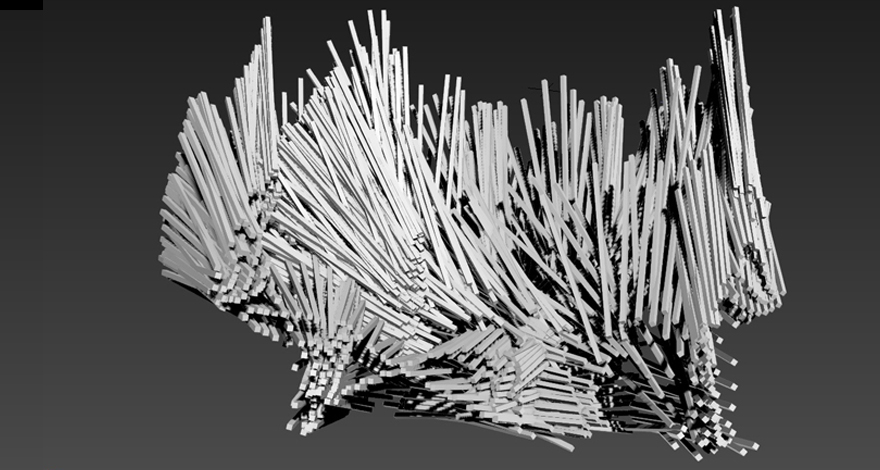
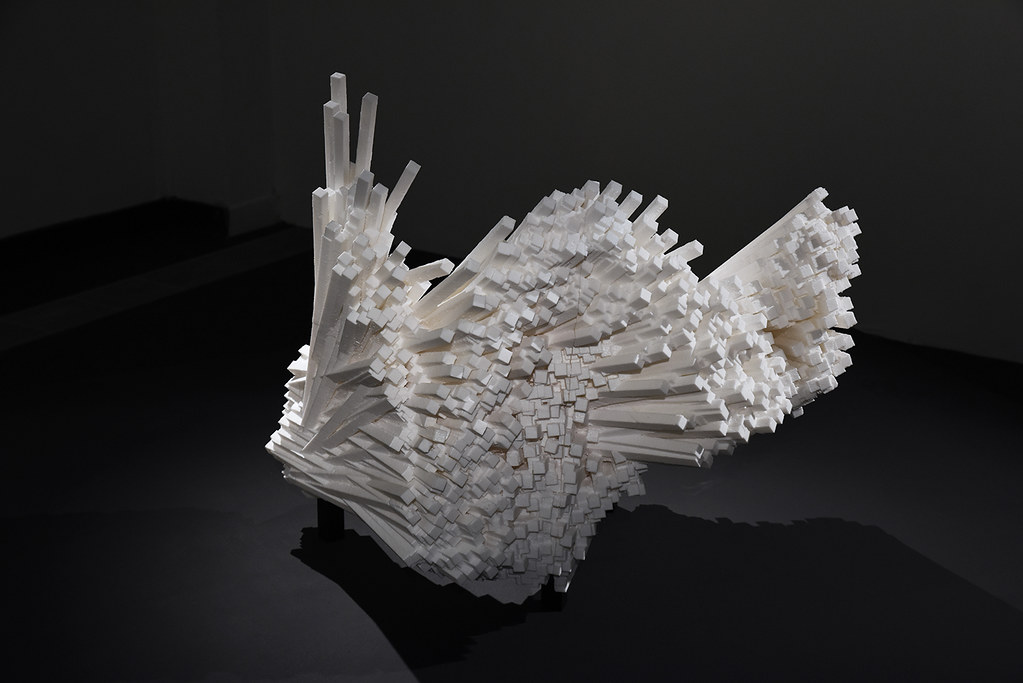
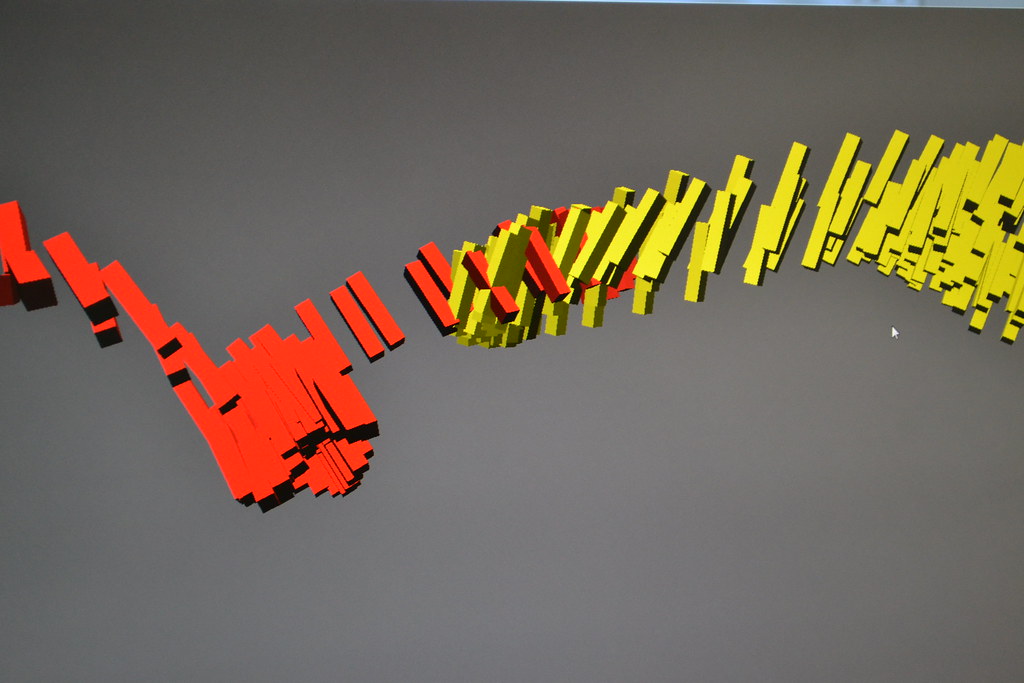
    M2F Créations – Lab GAMERZ accueille l’artiste Paul Destieu, pour la création de son nouveau projet Archive d’une Frappe. Un projet de sculpture, qui matérialise dans l’espace la trajectoire des baguettes d’un batteur percussionniste en une forme à échelle 1/1. Archive d’une frappe propose une démarche prospective vers la matérialisation plastique de formes sonores et musicales. La matérialisation de la pièce se fera à partir de 3 étapes successives : Analyse et captation des mouvements d’un batteur, modélisation d’une trajectoire et impression de la frappe en trois dimensions.

     
    Archive d’une frappe
    Modèle #1 (Damien Ravnich, solo pour caisse claire, tom alto et charleston)
    Impression 3D PLA, 2014/2015
    Cycle de recherche réalisé au sein du Lab Gamerz – M2F Créations
    Production : Lab Gamerz / M2F Créations, OTTO-Prod, DICREAM
    Développement : Damien Ravnich, Lab Gamerz, Bastien Vacherand, Gonzague Defos Du Rau, Guillaume Stagnaro
     
    Le cycle de recherche Archive d’une frappe interroge la matérialisation de formes sonores et musicales.
    Le projet entreprend une collision des structures sonores et plastiques en convoquant les pratiques visuelles et média contemporains dans une relecture sensible des langages musicaux.
    Le projet regroupe une série de créations polymorphes, résultant de la captation et de l’analyse des mouvements d’un batteur percussionniste, se focalisant sur les tensions émergentes entre le musicien et son instrument. Cette expérience se concentre sur le déploiement temporel et spatial d’une gestuelle, les baguettes traduisant mécaniquement un rapport au temps par l’interprétation du rythme, et du son par un développement physique. Chacune des étapes de la chaîne de production propose successivement une appropriation numérique de ce geste unique. Une fois captée, modélisée puis imprimée en trois dimensions, la frappe est extraite de son contexte pour figer la contre-forme de l’interprète et de l’instrument. L’archive rassemble une série de glissements entre écoute et regard.
     
    Paul Destieu vit et tra­vaille à Mar­seille, France.
    Ses recherches inter­rogent l’évolution des médias et la place qu’ils occupent dans notre envi­ron­nement actuel. Ses réflexions sont sen­si­blement nourries par l’histoire des tech­no­logies, des lan­gages, du son ou du cinéma. Sa pra­tique de l’image se déve­loppe dans une relation élargie à d’autres médias, à la recherche de nou­velles formes d’expression et de logiques de création par le biais du son, de mises en espace, des outils numé­riques et de l’architecture. Son travail investit de manière trans­versale les ten­sions qui se jouent entre l’émergence et la dis­pa­rition d’outils à dif­fé­rentes époques. Il s’agit alors de pousser ces tech­no­logies dans leurs retran­che­ments, à la limite de leur point de rupture, pour ali­menter autant de sens de relecture de notre his­toire.
    Il est à l’initiative d’Otto-​​Prod /​ La Vitrine et par­ticipe à la mise en place d’échanges entre la France et la Slo­vénie ainsi que dif­fé­rentes ini­tia­tives cultu­relles autour de cette dyna­mique.
     
    http://www.pauldestieu.com


    2015 - Résidence Paul Destieu (part. 2)


    2014 - Résidence Paul Destieu (part. 1)


    2013 - décembre - Préparation résidence Paul Destieu
  • Monika Šmídová residency

    Monika Šmídová residency

    La résidence de Monika Šmídová, artiste et chorégraphe de Prague (République Tchèque), a été mise en place par M2F Créations en février 2014 au Lab Gamerz. afin de co-produire sa prochaine performance / installation.
    Cette résidence s’inscrit dans le cadre du projet CONNEXT soutenu par la Commission Européenne programme Culture.


    2014 - février- Résidence Monika Šmídová
  • Flat Earth Society – V2 (Art of Failure)

    Flat Earth Society – V2 (Art of Failure)

    Flat Earth Society was done in the frame of a creation residency in Lab GAMERZ (2014).
     
    Art of Failure – FLAT EARTH SOCIETY (V2)
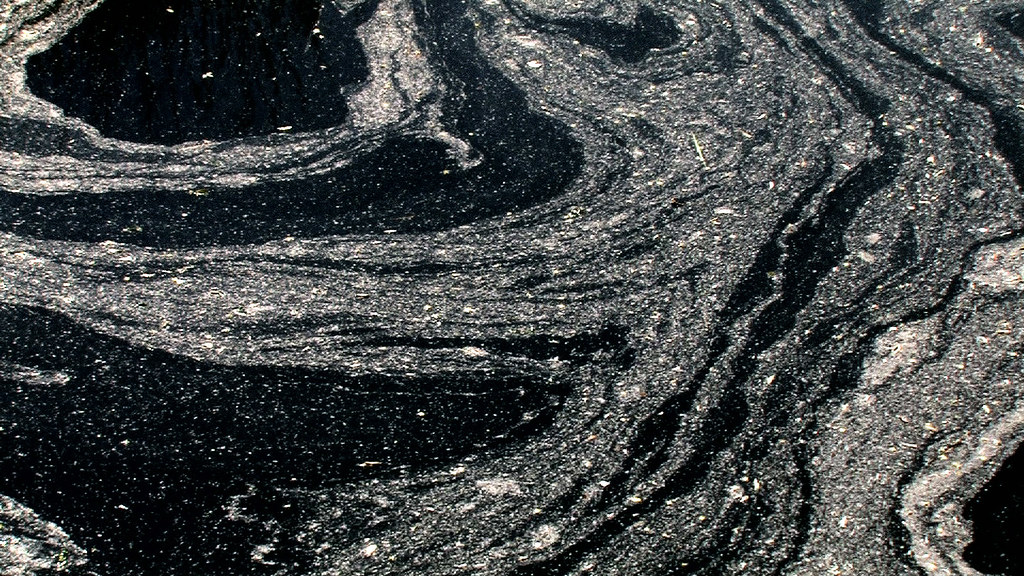
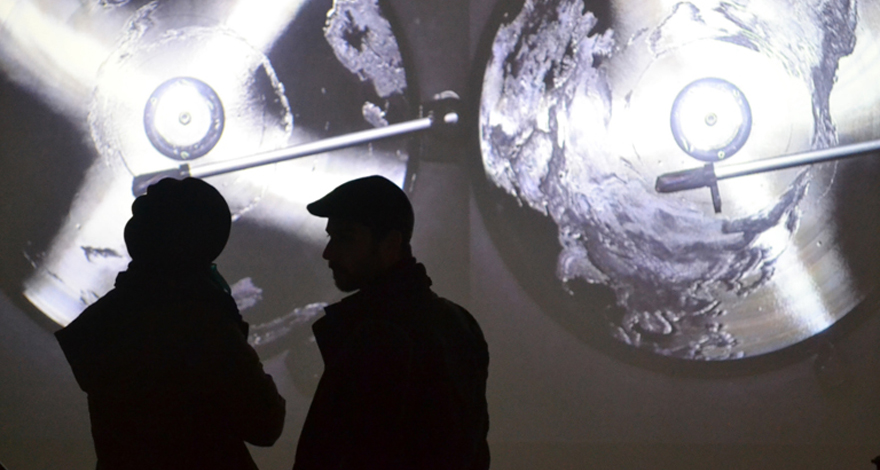
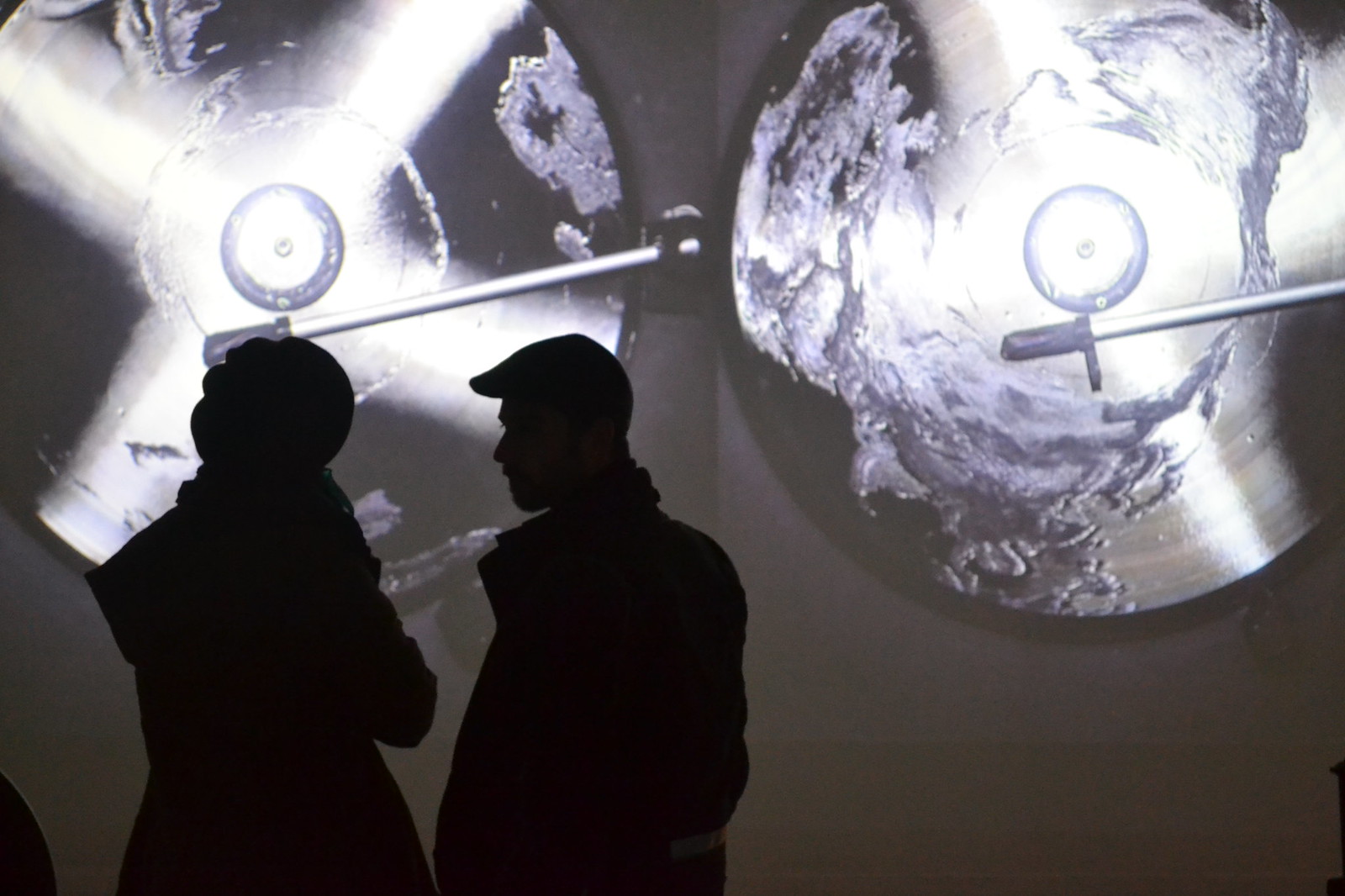
    « Can we hear the Earth? Not the sounds occurring upon it but the Earth on a geophysical scale? […]
    The hill-and-dale technique was used in Edison’s phonograph, recording sound with a stylus that vertically cut a minute landscape into the grooves of the cylinder. […]
    Flat earth society takes readings from the stylus of topographic radar, cuts them into vinyl and then plays them back with a stylus. Phonographic hills-and-dales grow into the Alps, Andes, Himalayas, Grand Canyon, Great Steppe, Great Rift Valley, Great Outback and the Lesser Antilles. Where Enrico Caruso and Nellie Melba once sang one hears the Baja Peninsula, Antarctic Peninsula, and the bathymetric pauses of the Red Sea and Baffin Bay. […]
    Peaks and valleys, spikes and wells, spires and troughs, aspirations and depressions, all have their
    gradations in mythical and actual landscapes. » Douglas Kahn
     
    Art of Failure
    Art of Failure is a collective founded by Nicolas Maigret and Nicolas Montgermont in 2006. In their realizations, the internal characteristics of the media are revealed through their errors, dysfunctions, borderlines or failure threshold, which they develop sensory and immersive audio visual experiences.
     
    http://artoffailure.free.fr
     
    2014 - Résidence Art of Failure

  • Tsantsa DIY

    Tsantsa DIY

    Ivan Chabanaud


    Tsantsa DIY, création holographique 2013


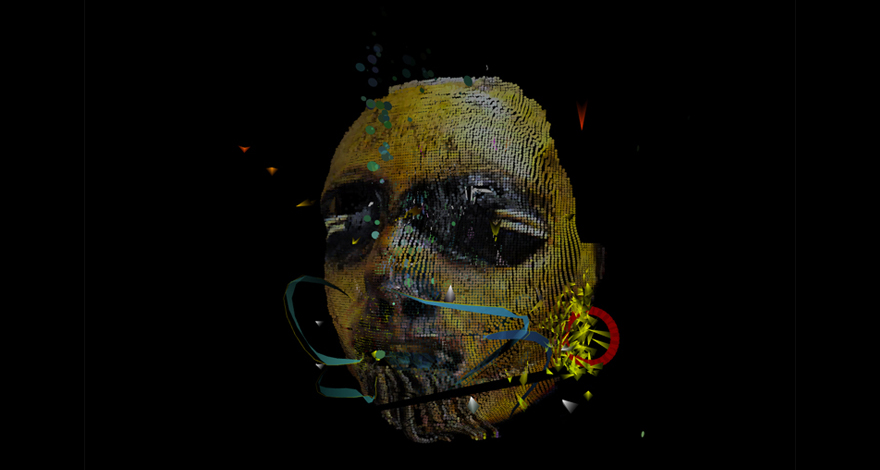
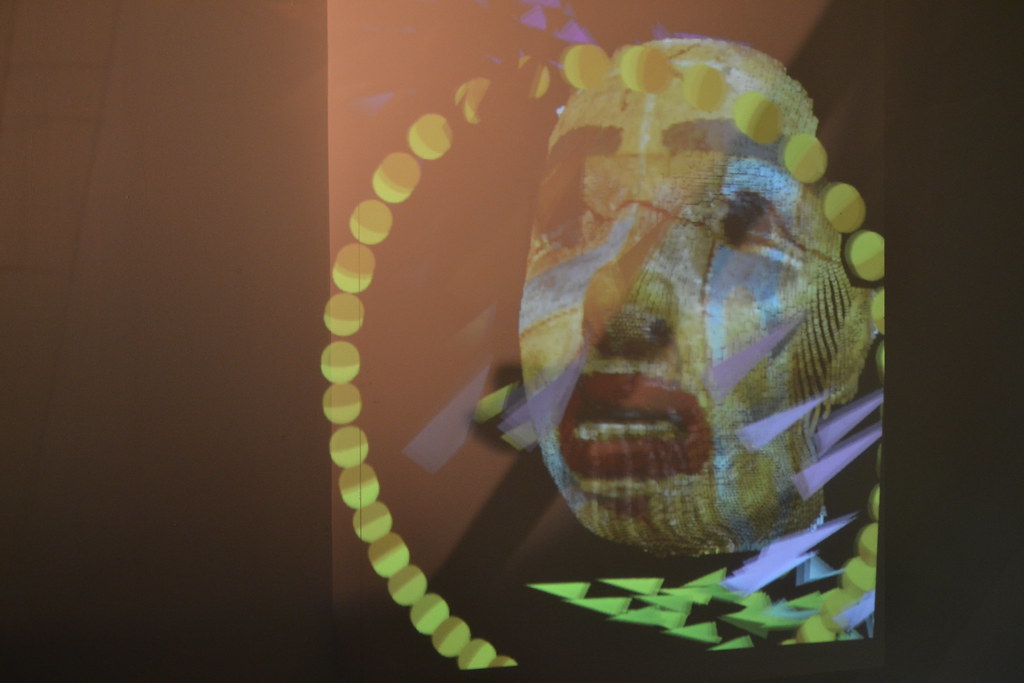
    Une tête réduite Mundurucu (Givaro) sert de sujet à une exploration interactive. Cet exemplaire est conservé au musée de La Vieille Charité de Marseille. Les éléments de la culture Nazca sont animé par le dispositif. Les flux générés par les capteurs. Une rotation ……

    Cette installation a été réalisée dans le cadre d’une résidence M2F Créations
    Réalisation : Openframeworks


    Ivan Chabanaud travaille depuis quelques années sur des projets de télé-présence liés aux spectacle et la scène en poursuivant sa recherche sur des mode de présentation support-volume à interaction naturelle.


    http://www.chabalab.net


    2013 - Tsantsa DIY
  • Project Arena

    Project Arena

    Geraud Soulhiol
     
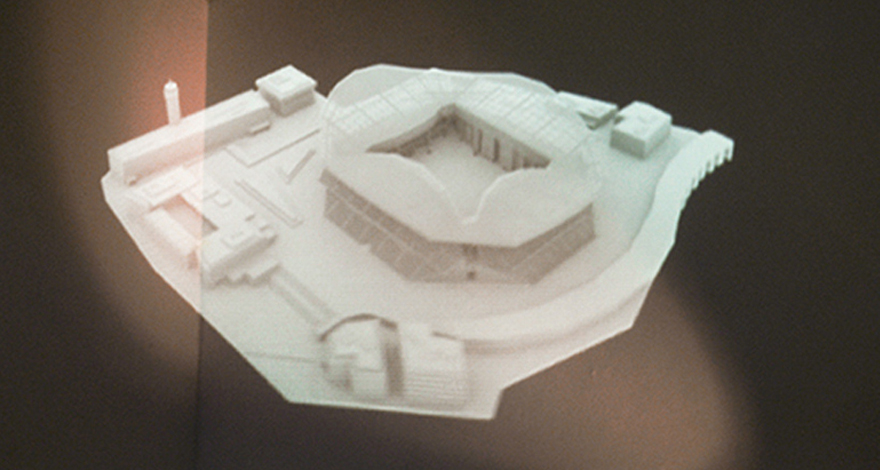
    “Arena project” is an artistic work by Géraud Soulhiol. Creation residency co-producted by Marseille-Provence 2013 and M2F Créations.
     
    words about what you’re going to show for the Gamerz Festival?
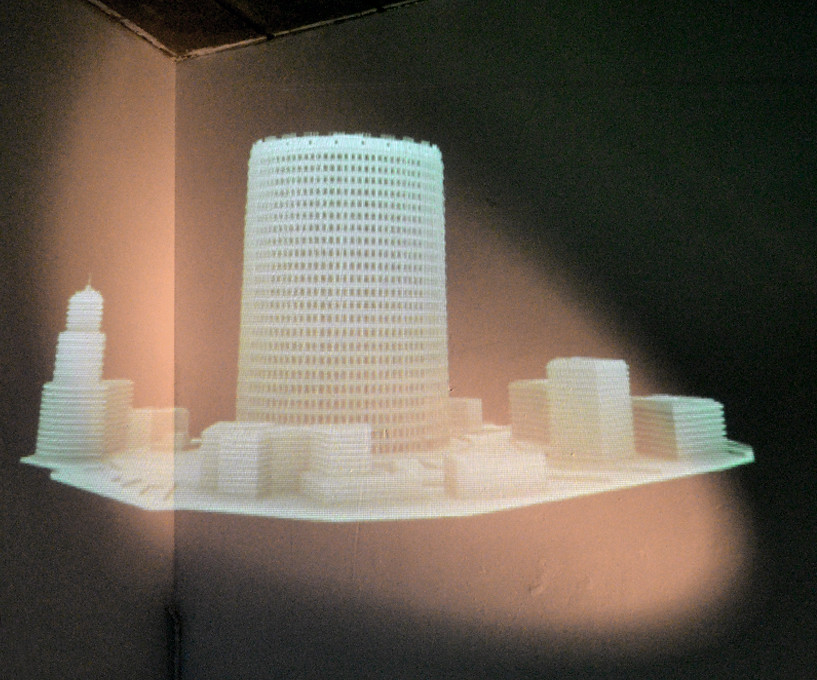
    Géraud Soulhiol: I am going to present a project called “Arena Project”. This work was done following a series of drawings called “Arena” made between 2009 and 2011, all dealing with football stadium and arenas in general. This work is a kind of dialogue between drawing and the possibility of 3D extension. I worked on modelling, and then wanted to exhibit crazy architectural projects : a series of models, but not only, also some other works and drawings realized both before and after the 3D process. A whole setting of works going from paper drawing to 3D drawing (including photomontage), with the idea to show counter architectures, to see the stadium as an object , a shape, and thus playing with constraints, extruding it and transforming in into a skycraper, thus abolishing its primary function. Playing with shapes, we come to sort of temples, overwhelming and extravagant shapes.
     
    EC: There is one for instance that looks like a pagoda…
    GS: Yes, for the first series of the arena project, I was playing with existing stadiums to which I added other types of architectures like cathedrals, factories, fortified castles .. A sort of collision of architectures presented in the middle of a blank page, like a deposed fortress in the middle of nowhere. This work is composed of three 3D models, based on real shapes. For instance, this extruded shape of pyramid that resembles a pagoda is actually the Signal Iduna Park in Dortmund, Germany, one of the biggest stadium in Europe, with its huge grandstand. I decided to turn it upside down, add grandstand, which results into this extravagant shape turning to the city.
     
    EC: Talking about your shift from paper drawing to 3D, did you choose specific softwares like architecture, design or drawing softwares? Did it impose particular constraints?
    GS: Basically I wanted to work only with very simple , opensource softwares like Google Sketchup That’s what I did until we had to use more specific softwares like 3DS max or Blender, in order to work on hologram animations, and also when we needed to print models on Makerbot. I had to deal indeed with new constraints right from the beginning : with this idea of drawing, there is no layering of textures on my models, no way to fake it, you’re really in front of closed shapes that require precision, detail, as if working on a miniature. Playing with scales, you can catch the observer into those new bits of territories. This is something I like.
     
    EC: What is your feeling about working with holographic technology?
    GS: What I like about holograms is the feeling you get of a moving model, that of entering the virtual projection of a totally crazy object that seems feasible. In the same way, what I like about stereolithography is to build a model from 3D. What I found funny was working with lines : the machine prints the lines before turning them in 3D, which reminds the process of drawing and expresses the fragility of the line. Because my work is based on playing I also wanted to go through various technologies and explore new media, in order to open new paths.
     
    EC: What is the next step? Are you interested in other types of monumental architectures?
    GS: I am getting more more interested in the idea of map territory. I am developing a work based on collecting from Google Earth, exactly like “Stadium Territory” presented in the frame of the “Arena Project”. Collecting is of great importance in my work, my approach being at the same time artistic , poetic and also humoristic. I like Roller coasters, luna-parks, cities like Las Vegas, Dubaï, Abu-Dhabi. Replicas as well, replicas of monuments like the Eiffel tower for instance, or miniature parks, again with the idea of the model. And more generally , monumental architectures made to host the public and in which you can project yourself.
     
    Interview by Ewen Chardronnet
     
    http://www.geraudsoulhiol.com/
     

    2013 - Résidence Projet Arena


  • Cyber Lesson # 32

    Cyber Lesson # 32

    France Cadet
     
    Cyber Lesson #32 was realized during her residence at the Lab in 2013, Gamerz 09.
     
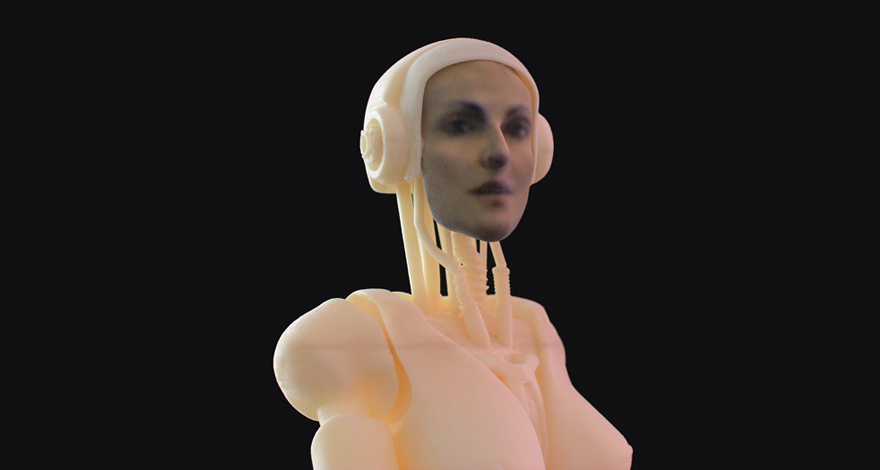
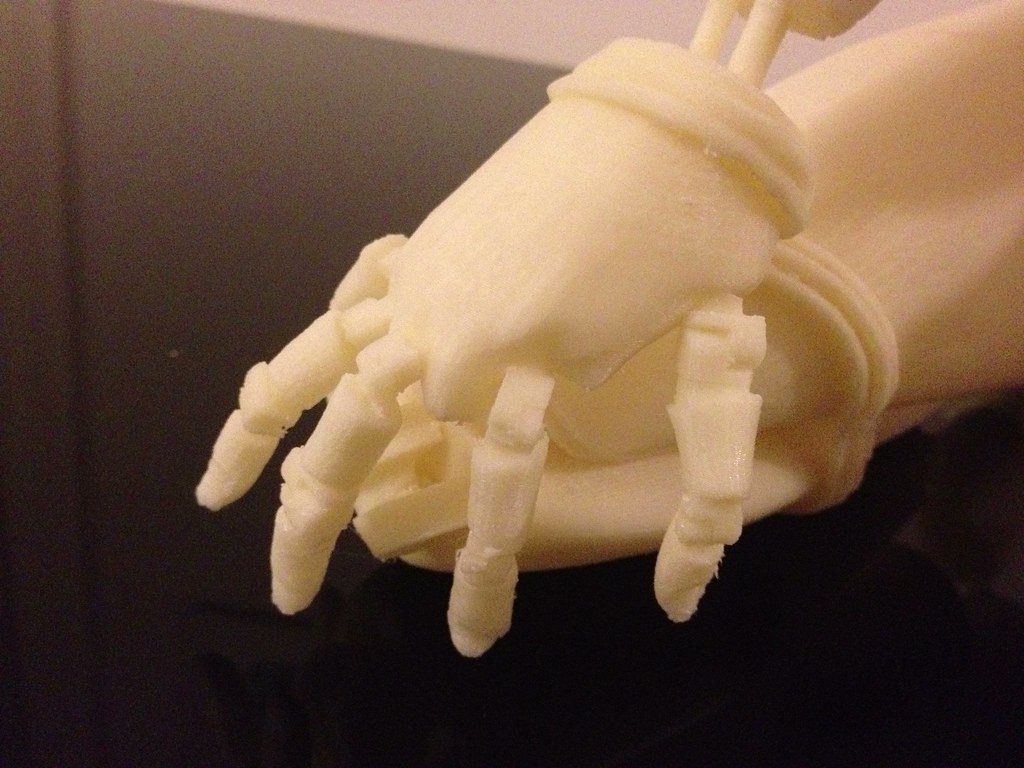
    Cyber Lesson # 32…, 3D printing sculpture 2013 Sexual objectification or robotics erotism? France Cadet once again diverses the seduction lesson from the famous lingerie brand, with a robotic version of Lesson 32. A cyborg sculpture of the artist realized thanks to 3D scan and printer, is kneeling on the ground hands tied. Like those fashionable Japanese human faced android, the sculpture seems able to feel and have sexual needs…or is it just programming? It’s up to you to say…
     
    http://www.cyber-doll.com/
     

    2013 - Résidence Cyber Leçon # 32
  • Barborious Ballets 2 : spaceteleported

    Barborious Ballets 2 : spaceteleported

    Renaud Bezy
     
    Renaud Bézy’s work goes through painting, performance, video and ceramics.
    Accordingly to Picabia’s maxim ” art is the cult of error “, Bézy enjoys traveling through the most criticized and old-fashioned types of image aesthetics. His re-interpretes and purposedly re-visits his references on a humouristic and playful mode. The artist has just been selected by CNAP (French National Center for Plastic Arts) to develop
    his video work series in Tahiti Ballets Barbares (Barbarious Ballets).


    http://www.renaudbezy.net


    2013 - Résidence Ballet Barbare 2 : spatioporté